
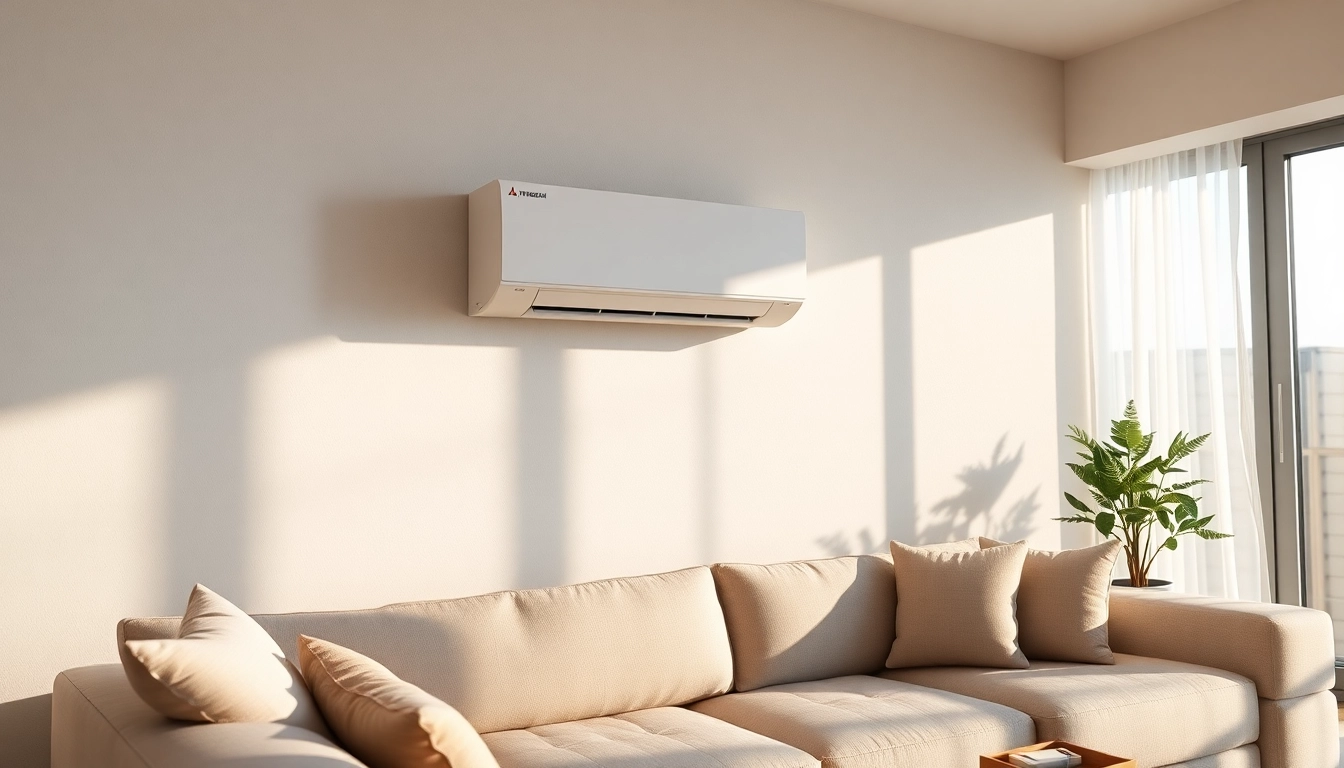
Understanding Mitsubishi Mini Split AC
What is a Mitsubishi mini split AC?
The mitsubishi mini split ac is a versatile air conditioning system that operates without ductwork, making it ideal for both residential and commercial environments. It consists of two main components: an indoor unit that distributes conditioned air and an outdoor condenser that expels heat. Unlike traditional central HVAC systems that require extensive ductwork, mini split systems are compact, efficient, and customizable, allowing for targeted cooling and heating in specific zones or rooms. This innovative design not only enhances comfort but also significantly reduces energy consumption in various settings.
Key Features of Mitsubishi mini split AC
Mitsubishi mini split AC units come with numerous features that set them apart from traditional HVAC systems:
- Inverter Technology: This technology adjusts the compressor speed according to the cooling needs, which enhances efficiency and reduces energy costs.
- Quiet Operation: Mitsubishi mini split AC units are designed to operate quietly, making them a perfect choice for bedrooms, offices, and other noise-sensitive spaces.
- Zoning Capability: Multi-zone systems allow control over different areas, enabling personalized comfort for every room in your home.
- Advanced Filtration: Many models include superior filtration systems that improve indoor air quality by removing dust, allergens, and pollutants.
- Smart Technology Integration: Some units come with Wi-Fi connectivity, allowing you to control settings remotely via smartphone apps.
Benefits of Choosing Mitsubishi mini split AC
Opting for a Mitsubishi mini split AC offers several advantages:
- Energy Efficiency: With SEER ratings often exceeding 20, these units provide exceptional efficiency compared to conventional systems.
- Flexible Installations: The absence of ductwork lets you install these systems in various configurations—on walls, ceilings, or even as floor models.
- Space Saving: The small indoor units take up minimal space and can be mounted high on walls, keeping floors clear.
- Targeted Heating and Cooling: With zoning, you can heat or cool specific rooms based on usage, which leads to further energy savings.
- Environmentally Friendly: Many models utilize eco-friendly refrigerants, making them a sustainable choice for conscious consumers.
Installation Process for Mitsubishi Mini Split AC
Preparation for installation
Installing a Mitsubishi mini split AC requires careful planning to ensure optimal performance:
- Site Assessment: Evaluate the area to determine the ideal location for both the indoor and outdoor units, considering factors like sunlight exposure and accessibility.
- Electrical Requirements: Ensure that your electrical system complies with the requirements of the mini split AC, potentially necessitating upgrades.
- Tools and Materials: Gather all necessary tools, including a drill, level, refrigerant line set, electrical wiring, and mounting brackets.
- Permit Requirements: Check local building codes and obtain any necessary permits before proceeding with the installation.
Step-by-step installation guide
Once the preparations are complete, follow these general steps for installation:
- Mount the Indoor Unit: Use brackets to securely attach the indoor unit to the wall, ensuring it is level and at an appropriate height.
- Install the Outdoor Unit: Place the outdoor condenser on a stable surface, ensuring adequate clearance for airflow and maintenance access.
- Connect the Refrigerant Lines: Carefully run the refrigerant lines from the indoor unit to the outdoor unit, ensuring there are no kinks or sharp bends.
- Electrical Connections: Connect the power source to the indoor and outdoor units following the manufacturer’s guidelines.
- Vacuum the Lines: Use a vacuum pump to remove any air from the refrigerant lines, preparing the system for operation.
- Test the System: Turn on the system and check for proper cooling/heating and refrigerant leaks before finalizing the installation.
Common installation mistakes to avoid
To ensure a successful installation, avoid these common pitfalls:
- Incorrect Sizing: Choose the right capacity unit; too large or small will lead to inefficiency.
- Poor Placement: Install units in locations with poor airflow or outside in direct sunlight without adequate shade.
- Neglecting Level Installations: An unlevel placement can affect performance and lead to drainage issues.
- Skipping the Vacuum Process: Failing to vacuum the lines can hinder performance and lead to compressor failure.
- Ignoring Local Codes: Always ensure you follow local codes and regulations regarding installation.
Maintenance Tips for Mitsubishi Mini Split AC
Regular cleaning and upkeep
Regular maintenance is crucial for maximizing the lifespan and efficiency of your Mitsubishi mini split AC:
- Filter Cleaning: Clean the air filters monthly or as needed to prevent dust buildup and maintain airflow.
- Check the Drainage: Ensure that the condensate drain is clear to avoid water pooling or leaks.
- Outdoor Unit Care: Keep the outdoor unit free of debris, weeds, and snow to maintain airflow.
- Inspect Insulation: Check the insulation on refrigerant lines for damage, ensuring efficient operation.
When to call a professional
Identify when it’s time to consult a professional technician for maintenance or repairs:
- Frequent cycling on and off without proper cooling or heating.
- Unusual noises from the indoor or outdoor units.
- Fluctuating energy bills that seem inconsistent with usage.
- Any signs of refrigerant leaks, such as ice build-up or liquid around the unit.
Signs of potential issues with Mitsubishi mini split AC
Be aware of these warning signs that indicate trouble:
- Weak Airflow: Insufficient airflow may indicate blocked filters or ductwork problems.
- Unpleasant Odors: Musty smells could point to mold growth in the indoor unit.
- Inconsistent Temperatures: Temperature variations from room to room can suggest zoning issues.
- Leaks: Any fluid leaking from the unit requires immediate attention.
Energy Efficiency and Savings
How Mitsubishi mini split AC saves energy
The Mitsubishi mini split AC is engineered for high energy efficiency, primarily through its inverter technology, which continually adjusts the compressor’s speed to match the desired room temperature. This minimizes energy waste and reduces wear and tear on the unit compared to conventional systems that frequently cycle on and off. Additionally, because mini split systems allow for zoned temperature control, homeowners can save considerable energy by only cooling or heating the spaces in use.
Comparing energy costs with traditional HVAC systems
When compared to traditional central heating and cooling systems, Mitsubishi mini split AC units typically offer lower operational costs. Central systems often involve significant energy loss due to ductwork inefficiencies—according to the U.S. Department of Energy, duct losses can account for more than 30% of energy consumption for space conditioning. In contrast, mini split systems deliver unnaturally balanced comfort without the associated ductwork losses, enhancing both energy efficiency and savings.
Tax incentives for energy-efficient systems
Investing in energy-efficient technologies like the Mitsubishi mini split AC may qualify homeowners for tax incentives or rebates. Various state and federal programs encourage the adoption of eco-friendly systems to reduce energy consumption. Always check local resources for energy efficiency tax credits, which can help offset the initial investment cost and make the system more economically viable over time.
Frequently Asked Questions about Mitsubishi Mini Split AC
What size Mitsubishi mini split AC do I need?
To determine the appropriate size, calculate the square footage of the room and consult a sizing chart or professional for BTU recommendations.
How quiet is Mitsubishi mini split AC?
Many Mitsubishi mini split AC models operate at sound levels as low as 19 decibels, making them quieter than most traditional HVAC systems.
Can Mitsubishi mini split AC work in extreme temperatures?
Yes, Mitsubishi mini split systems are engineered to operate efficiently in extreme temperatures—both hot and cold—ensuring comfort year-round.
How does zoning work with Mitsubishi mini split AC?
Zoning means dividing your living space into areas that can be conditioned independently. This allows for tailored comfort and energy savings in specific rooms.
What is the lifespan of a Mitsubishi mini split AC?
With proper maintenance, a Mitsubishi mini split AC can last 15 to 20 years, making it a long-lasting investment in home comfort.